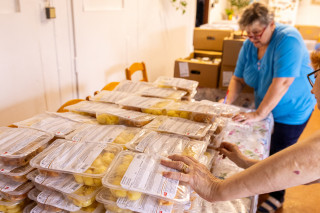


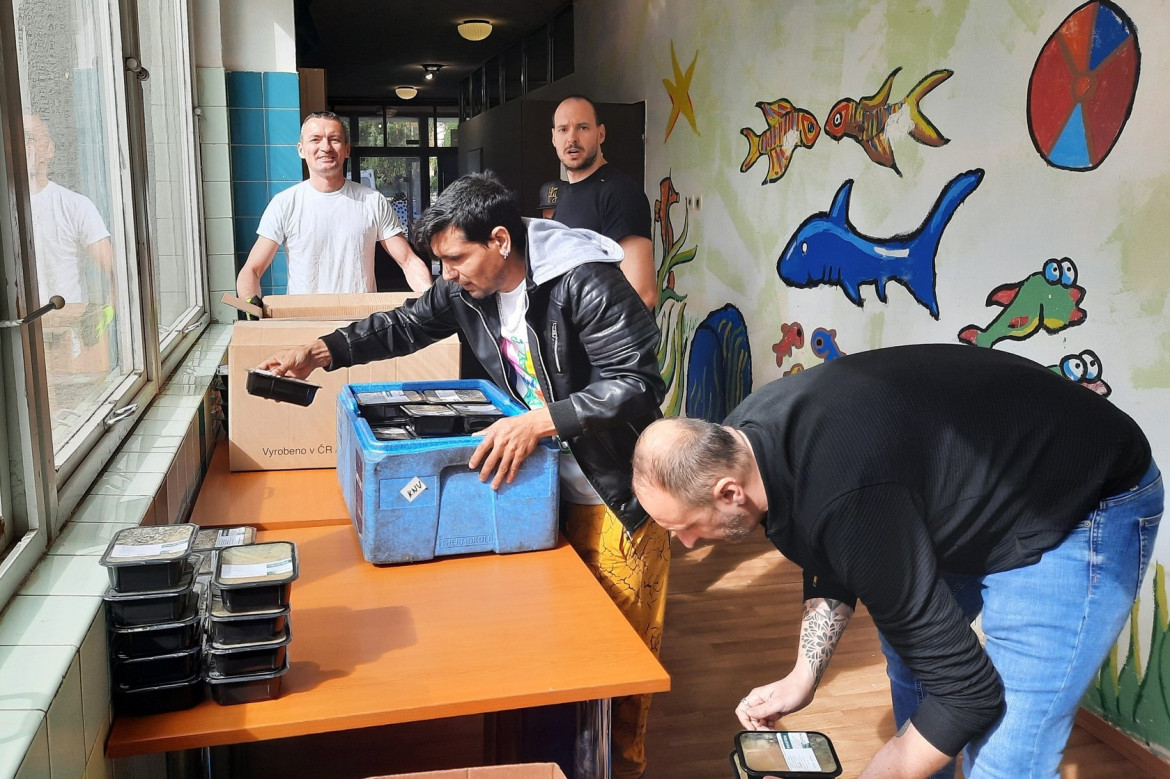
Until December 15, you can help single mothers with children or homeless people who have been given a second chance at life in the facilities of the Archdiocesan Caritas Košice.
Who will you help? For example, even two families. Silvia Hrabčáková wrote to us about their stories.
One night she packed up the children and left
When the door closes, usually only silence can be heard. However, silence never came to Mary. There was banging, screaming, hitting walls, and then that strange kind of emptiness that remains after fear. Maria has five children. Five different personalities, five worlds that tried to believe her every morning that today would be better than yesterday. The eldest daughter already knew what it meant to listen to footsteps behind the wall and estimate whether it was possible to sleep at night. The youngest Jurko still did not understand why his mother always jumped at the sound of the keys.
For a long time, Maria believed that she would somehow endure. That her partner would change, that it was just nerves, just alcohol, just a failure at work. Sometimes he apologized. Sometimes he brought a toy. And then it happened again. The turning point came inconspicuously, not with one big explosion, but with the tired look of her son when he hid under the table and said: "Mom, I don't want to be home when he comes back."
She didn't pack many things in one night. She took her documents, a couple of T-shirts, her favorite stuffed animal and five small hands. She went out quietly so as not to wake up the children more than necessary. She didn't play it safe. She went for safety. The first days were like walking through fog. She didn't know what would happen tomorrow. She only knew that no one was screaming today. That you can eat tonight without anyone being afraid. That today she can wish the children a good night and really mean it.
She found temporary shelter in the Crisis Center for Mothers with Children of the Archdiocesan Caritas Košice. There, for the first time in a long time, she knew that in the morning she would have a place to get up with her children, where to wash, where to have dinner without tension in her stomach. The roof over our heads was just the beginning. Equally important was the fact that there were people who understood what she had experienced: social workers, psychological help, a safe regime, step by step to turn chaos into a plan.
A family trying to get out of generational poverty...
Eva and Roman have three children and a life set to exact numbers. Every week the same questions: what can be postponed, what will somehow endure, and what can no longer be bypassed. They both grew up in an environment where money was always lacking and the idea of a better life was just a dream. Even so, they tried to make at least small changes: Roman was trying to find a full-time job, Eva was looking for part-time jobs in the evenings. These were not big dreams, rather a silent effort not to fall completely to the bottom again.
The children perceived the situation through everyday restrictions rather than through big events. Gradually, they got used to adjusting their expectations to what was possible at home and what would put additional pressure on their parents. In such a household, stress does not manifest itself noticeably, but rather accumulates in small decisions. It comes in what is not said out loud and in the fatigue that becomes a common background of the day.
The turning point came at the moment when parents clearly saw that it was not just a momentary shortage, but a pattern that children began to adopt as normal. It was not one dramatic situation. It was rather a gradual realization that repeated renunciation, uncertainty and constant improvisation no longer shape only their lives, but also children's ideas about what they can expect from the future. At that time, short-term survival became the goal to stabilize the situation and interrupt this transmission to the next generation.
When debts and uncertainty piled up so much that they could no longer cope at home, they found temporary shelter in the Crisis Center for Mothers with Children of the Archdiocesan Caritas Košice. They had a roof over their heads, peace and professional help that helped them unravel their debts, set the next steps and believe again that their story does not have to repeat itself in the same way with children. Currently, the family has been stabilized. Both parents are working and are currently waiting for their own housing.
How to donate lunches?
All you have to do is send an e-mail with the consent to withdraw credits from your meal card worth one, two... ten lunches – it's up to you what amount of credit you choose. The price for chilled food is €4.65. You need to provide your name, ID card number, as well as the number of lunches you want to donate. Send an e-mail with these details to: garancne.centrum.1860@delirest.sk